History

History
|
|
|
|
By the end of XVII century, Spain had to face a series of particular circumstances that motivated that the system for the defense of the Virreynato became obsolete. Thanks to the requests of the successive virreyes, the Spanish Court decided to make a military reorganization. The “regulation for the Military services disciplines of Infantry and Cavalry of the Virreynato de Buenos Ayres, 1801, contained the norms for the new organization of all the virreinato. Although the Regulation did not give special dispositions for the formation of urban military services, established that all the inhabitants listed in the bodies of disciplined military services did not belong to the urban ones, for being general to have to take the arms in defense from the King and the religion. |
|
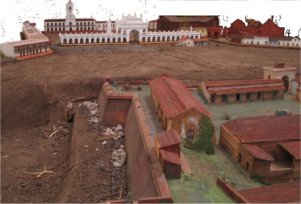
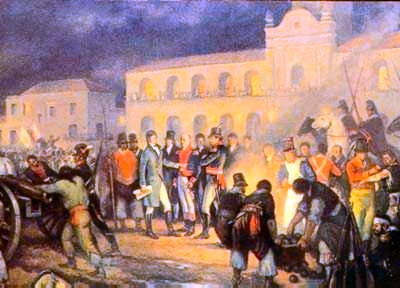
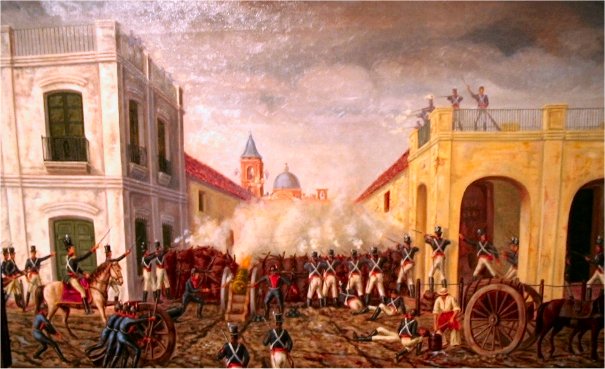
The voluntary military service The bad performance of the virreinales forces, proven by the fall of Buenos Aires by the end of June of 1806 into the hands of a small British contingent, showed the inefficiency of the military services without instruction neither discipline, badly armed and commanded, when facing troops or trained actually of the war. The action of Reconquista, also showed the importance of union of the moral forces. Taking advantage of the great enthusiasm that the victory had caused in the town and being headless the main authority by absence of the Virrey Sobremonte, the Town hall of Buenos Aires, caused the meeting of a general congress “to affirm the victory”. This way Buenos Ayres was prepared for which they intuited would be a second attempt of occupation. Virreinal Buenos Aires. In the image part of the Fort, recova, the Town hall can be observed. |
|
|
|
 Cronology
 |
|
|
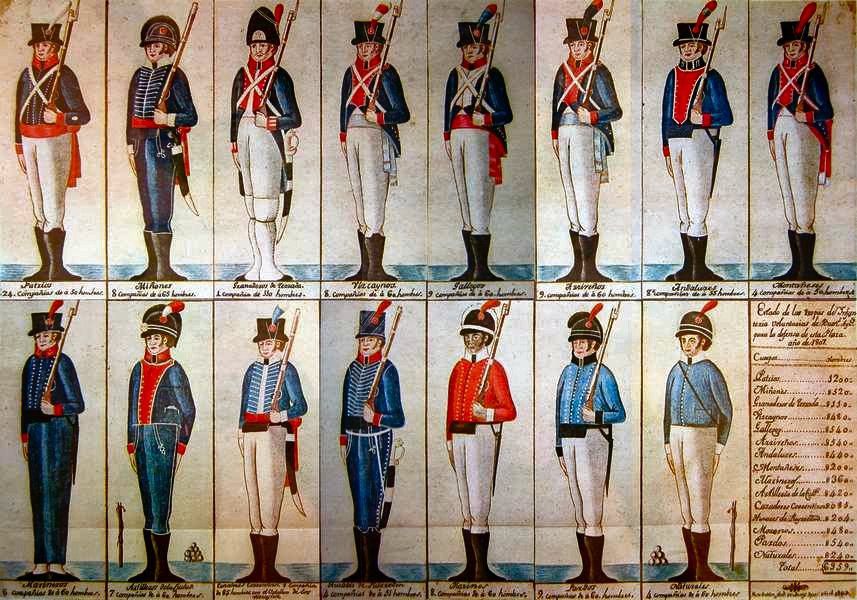
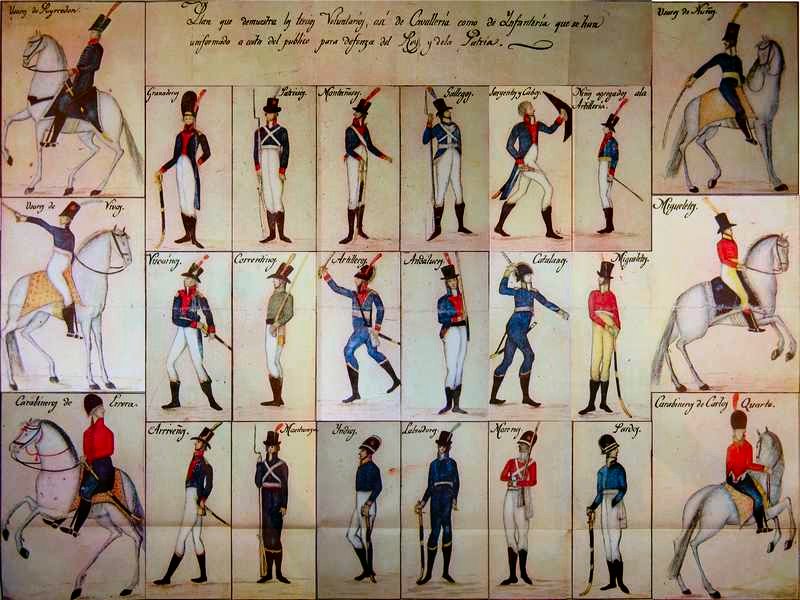
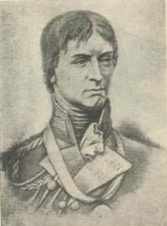
Designated Santiago de Liniers by imposition of the town of Buenos Aires, Commander of the arms dedicates all to his activity and initiative to fulfill the difficult order that had trusted to him. The Meeting military, led the study and deliberations for the organization of the new forces and the determination of the measures to assure the defense the capital and its coast. As a result of these activities they were created more than twelve peninsular and American ethnic group or volunteerses of different regions. These were: Patricios; of Patriotic of the Union; of Natural, Pardos; Tercio de Montañeses; of Andalusia; of Galician Volunteers, of Vizcaínos and Urban Volunteers of Catalonia. |
|
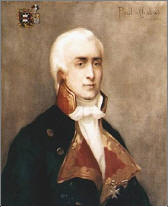
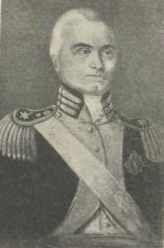
Santiago de Liniers y Bremond (1753-1810), organizer of the urban military services that defended Buenos Aires in 1807. |
|
|
|
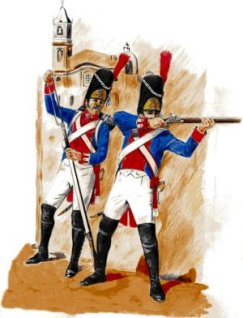
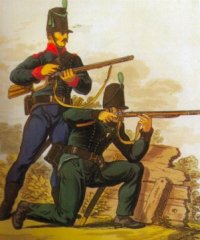
Laminae representing the milicianos bodies of the River Plate, of Doldan
|
|
6 of September. The proclamation of Liniers takes place, for the creation of the urban Bodies for the defense of Buenos Aires |
|
9 of September. Part of the order of Santiago de Liniers for the call of the urban military services. |
|
18 of September. The Tercio of Montañeses is created, constituted by the Cantabrian neighbors who lived in that city. The personnel of this unit composed the children of the region that in the future would form the province of Santander. The Body had like pattern to the Santísima Trinidad, invocation of the First Church of the city. The Body was formed by Don Jose of the Oyuela, of Castilian origin, being the second commander the captain Pedro Andrés Garci'a, born in Santander, and member of one of the families but distinguished of Buenos Aires and notary public.
9 of November. The flags of the Volunteers Montañeses or Cantabrians, receive the blessing next to the flags of the Legion of Patricios, in Santa Iglesia Cathedral of Buenos Aires. The mass is pronounced by the Zamudio archdeacon and blessed by the bishop Monsignor Benito de Lue and Riega. By this fact the Body of Montañeses has the privilege to go to the vanguard of the other volunteerses. 10 of November. The 3 battalions of the Patricios Legion and the Body of Mountain dwellers are named safekeeping of the Real standard of the city of Buenos Aires. |
|
|
Pedro Andrés Garci'a (1758-1833) Hero of Defense, supported to Liniers in 1809 and participate in the revolutionary movement of 1810. |
|
||||||||||||||